
The Art of the Campfire: A Gentleman's Guide to Building the Perfect Blaze
From kindling selection to flame management, master the timeless skill of building a campfire that commands respect and warms the soul.
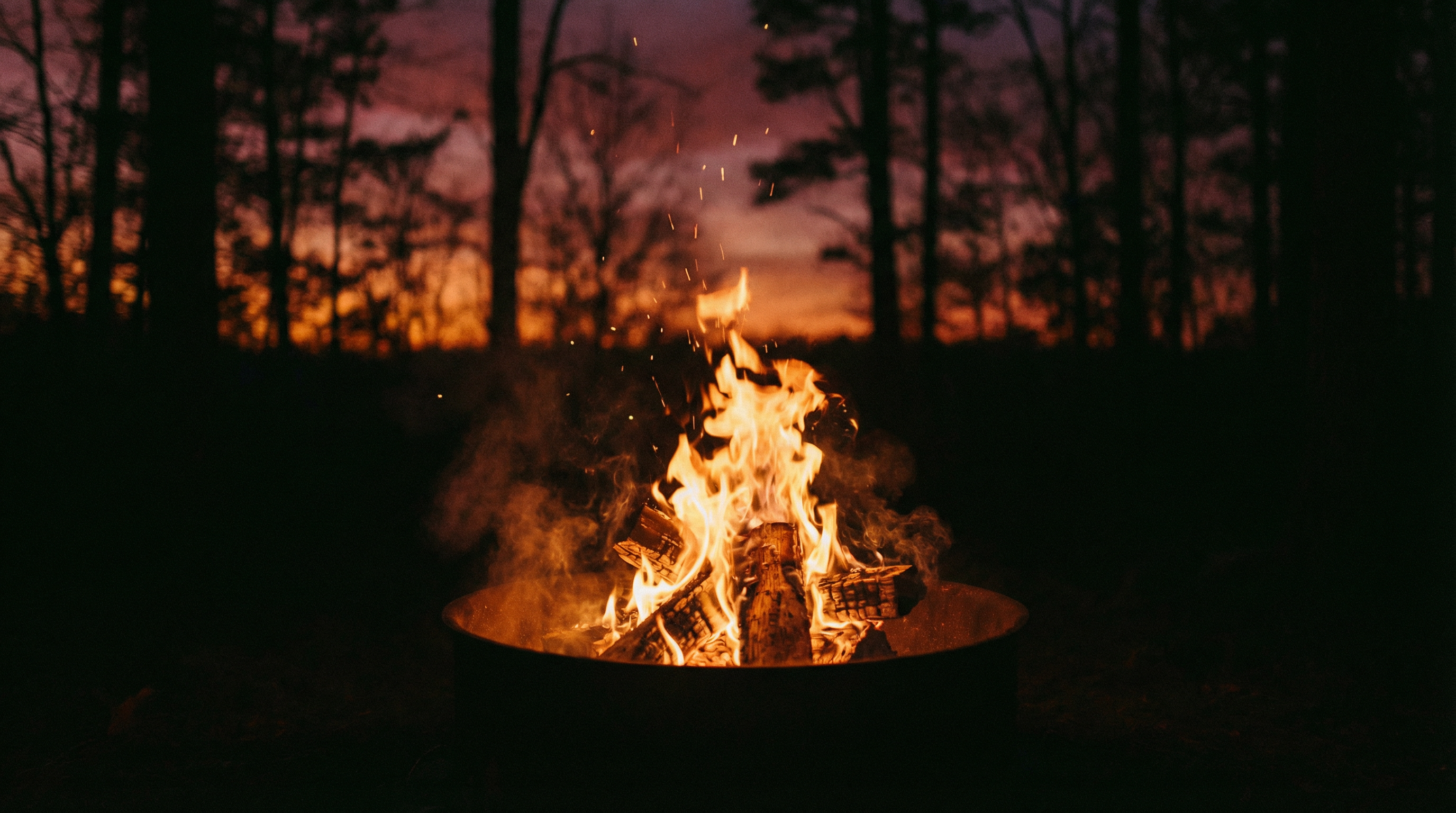
There is a moment, just as the sun dips below the treeline and the forest exhales its last warmth, when a man must make a decision. He can retreat to the cold comfort of a propane stove and LED lantern, or he can do what men have done for millennia: he can build a fire.
A gentleman knows which path to choose.
The Philosophy of Flame
Before we discuss technique, let us first consider what a campfire truly represents. It is not merely a source of heat or light — though it is certainly both. A well-built fire is a declaration of competence, a meditation on patience, and an invitation for honest conversation. Around a campfire, pretense melts away like morning frost. Stories are told. Silences are comfortable. Whiskey tastes better.
The man who can build a proper fire has demonstrated something essential about his character: he understands that good things require preparation, patience, and respect for natural forces beyond his control.
Selecting Your Site
Every worthy endeavor begins with proper preparation. Before gathering a single twig, survey your surroundings with intention.
The ideal fire site possesses these qualities:
- A flat, clear area at least ten feet from tents, trees, and overhanging branches
- Natural windbreak from terrain or vegetation (but not so enclosed that smoke cannot escape)
- Proximity to your camp, but not so close as to invite sparks onto your gear
- Mineral soil or existing fire ring when possible
If a fire ring exists, use it. There is no glory in scarring fresh earth when a perfectly serviceable ring awaits. A gentleman leaves the wilderness better than he found it.
The Trinity of Fire: Tinder, Kindling, Fuel
Like any craft, fire-building requires quality materials arranged with purpose. Gather far more than you think you need — nothing derails an evening like watching your nascent flame gasp for fuel while you scramble in darkness for more wood.
Tinder: The Spark’s First Home
Tinder ignites from a spark or small flame and burns hot enough to catch kindling. The best tinders are:
- Birch bark: The gentleman’s choice. Peels easily, ignites readily, burns hot. Seek bark that has already shed from the tree; never strip living bark.
- Dry grass and leaves: Gather the driest available, crush slightly to increase surface area.
- Fatwood: Pine heartwood saturated with resin. If you find a fallen pine with exposed heartwood, you’ve struck gold.
- Cotton balls with petroleum jelly: Yes, this is preparation brought from home. A gentleman comes prepared.
Kindling: The Bridge
Kindling catches from burning tinder and builds enough heat to ignite your fuel wood. Think pencil-thickness to thumb-thickness sticks, absolutely dry.
The key is gradation. Start with the thinnest pieces closest to your tinder, graduating to thicker sticks as the fire builds. Rushing this stage is the amateur’s fatal error.
Fuel: The Evening’s Companion
Once established, your fire needs properly sized fuel wood. Wrist-thickness pieces for a cooking fire, forearm-thickness for evening warmth. Avoid the temptation to throw on massive logs prematurely — a fire must earn its fuel through demonstrated vigor.
A note on wood selection: Hardwoods (oak, maple, hickory) burn longer and hotter. Softwoods (pine, cedar) ignite easily but burn fast and spark excessively. The wise man gathers both, using softwood to establish his fire and hardwood to sustain it.
The Architecture of Flame
There are many methods for arranging your materials. Three have proven themselves across centuries:
The Teepee
Perhaps the most intuitive structure: tinder in the center, kindling arranged in a cone around it, fuel wood forming a larger cone around that. The teepee concentrates heat upward, encouraging rapid ignition and tall flames.
Best for: Quick warmth, ambiance, boiling water.
The Log Cabin
Place two larger sticks parallel, then two more perpendicular on top, building upward like stacking Lincoln Logs. Fill the interior chamber with tinder and kindling. As the structure burns, logs fall inward, feeding the fire.
Best for: Long burns, cooking (creates excellent coal bed).
The Lean-To
In windy conditions, place a large log as a windbreak. Lean kindling against it, sheltering your tinder. The log absorbs heat and eventually catches, becoming part of the fire itself.
Best for: Challenging conditions, gradual fire growth.
A gentleman masters all three and selects according to conditions and purpose. There is no singular “best” method — only the right method for the moment.
The Moment of Ignition
Now comes the moment of truth. Kneel before your creation with appropriate reverence. Shield your match or lighter from wind. Touch flame to tinder at the structure’s base, where oxygen flows most freely.
Then: patience.
The amateur blows vigorously at the first wisp of smoke. The gentleman knows better. Gentle breaths. Steady encouragement. Let the fire find its rhythm before demanding more.
When kindling catches — truly catches, with visible flame rather than mere smoke — you may begin adding larger pieces. One at a time. Placed, not thrown. Fire rewards deliberation.
Maintaining the Blaze
A fire requires attention but not anxiety. The common errors:
Over-stoking: Smothering flame with too much fuel. A fire needs oxygen as desperately as it needs wood. Leave space between logs.
Neglect: Allowing the fire to burn too low before adding fuel. Maintain a bed of coals and active flame; rebuilding from embers is possible but wasteful.
Poor positioning: Adding logs perpendicular to existing ones blocks airflow. Parallel arrangement maintains the fire’s architecture.
Think of tending a fire as conducting an orchestra. You provide structure and occasional guidance, but the music creates itself.
The Cooking Fire
Should supper be your purpose, resist the urge to cook over open flame. Wait. Build your fire, then let it subside to glowing coals — those white-edged, radiant remnants that emit steady heat without chaotic flame.
Arrange coals beneath your grill grate or cast iron. Cooking over coals rather than flame offers:
- Consistent, predictable heat
- Minimal smoke interference
- Control (push coals closer or farther as needed)
- That perfect sear without the flare-ups
A gentleman cooks steaks over coals, never flame. This is not a suggestion.
Extinguishing: The Gentleman’s Exit
How you leave your fire reveals as much as how you built it.
Begin extinguishing well before you need the fire gone. Spread coals with a stick, separating them to cool. Add water gradually, stirring the ash into a slurry. Feel for heat with the back of your hand held several inches above. Repeat until all warmth has departed.
Never bury a fire. Buried coals can smolder for days, potentially reigniting. Never leave a fire “to burn itself out.” You are responsible until the last ember fades.
A fire pit should be cold enough to touch before you walk away. This is not caution but obligation.
The Unspoken Benefits
We have discussed technique, but the true value of campfire mastery transcends the practical.
Building a fire connects us to something ancient and essential. In a world of instant gratification, here is a skill that demands preparation, patience, and presence. No app can build your fire. No shortcut exists that does not compromise the result.
The man who kneels before a ring of stones with kindling in hand participates in a ritual older than civilization itself. He joins an unbroken chain stretching back to the first human who understood that fire meant survival, and that survival was worth the effort.
And when the flames rise, when the warmth reaches his face and the light pushes back the darkness, he knows something that cannot be purchased or delegated or automated:
He knows he built this himself.
The wilderness awaits, and it respects preparation. Next time you find yourself beneath open sky as darkness approaches, remember: any fool can light a fire. A gentleman builds one.