
The Gentleman's Guide to Choosing the Perfect Beard Oil
Navigate the world of beard oils with discernment. Learn what separates the exceptional from the ordinary, and find the oil your beard truly deserves.
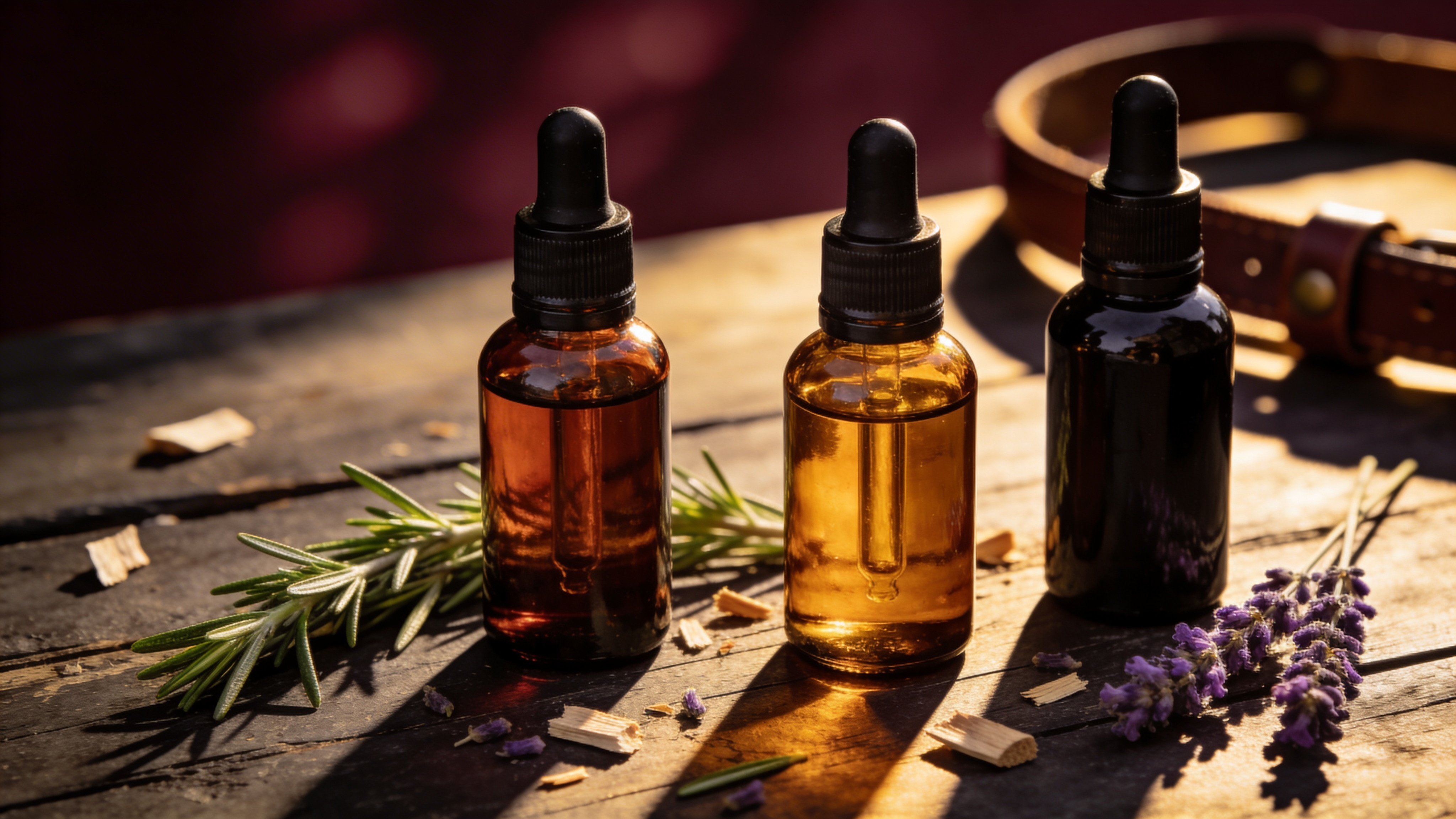
There’s a moment every bearded man experiences.
Standing in an aisle—or scrolling through endless listings—confronted by dozens of beard oils, each promising transformation. Viking-themed bottles compete with apothecary aesthetics. Price points range from spare change to small fortunes. And the scent descriptions read like poetry written by someone who’s never actually smelled a forest.
A gentleman cuts through the noise.
Because choosing the right beard oil isn’t about marketing claims or handsome packaging. It’s about understanding what your beard actually needs and finding the formulation that delivers it.
The Anatomy of Quality Beard Oil
Every beard oil worth its bottle contains two essential components: carrier oils and essential oils. The ratio and quality of these ingredients determine everything—from how your beard feels to how long the benefits last.
Carrier oils do the heavy lifting. They moisturize, condition, and create the foundation of any good formula. A gentleman learns to recognize the names worth trusting:
-
Jojoba oil — The gold standard. Its molecular structure mirrors your skin’s natural sebum, making it absorbed readily without greasy residue. If a beard oil contains nothing else of note, jojoba makes it serviceable.
-
Argan oil — Morocco’s liquid gold, and for good reason. Rich in vitamin E and fatty acids, it softens coarse beard hair like few other ingredients can.
-
Sweet almond oil — Light, fast-absorbing, and gentle enough for sensitive skin. Excellent for men who find heavier oils troublesome.
-
Grapeseed oil — The unsung hero for men prone to acne. It moisturizes without clogging pores, a rare and valuable quality.
Essential oils provide scent and supplementary benefits. Cedarwood strengthens. Tea tree combats beard dandruff. Peppermint invigorates. A well-crafted blend balances fragrance with function.
The Ingredients a Gentleman Avoids
As important as knowing what to seek is knowing what to avoid.
Mineral oil and petroleum derivatives — These sit on your beard and skin rather than absorbing, creating an illusion of moisture while actually preventing proper hydration. They’re cheap fillers that belong in machinery, not on your face.
Artificial fragrances — Listed simply as “fragrance” or “parfum,” these mystery blends often contain allergens and irritants. A quality oil names its scent sources—essential oils, botanical extracts—with specificity.
Silicones — They make your beard feel smooth temporarily while building up over time, eventually leaving hair dull and your pores congested.
If the ingredient list reads like a chemistry exam or hides behind vague terminology, a gentleman looks elsewhere.
Understanding Your Beard’s Needs
Different beards demand different approaches. The oil that transforms your friend’s whiskers may do nothing for yours—or worse.
For coarse, wiry beards: Seek formulas heavy on argan and castor oils. These have the weight and conditioning power to tame stubborn hair. A beard balm used in conjunction may provide additional structure.
For fine, soft beards: Lighter oils like jojoba and grapeseed absorb without weighing down. Avoid overly thick formulations that make fine hair look greasy.
For dry, itchy skin beneath: This is a skin problem as much as a beard problem. Look for oils featuring hemp seed or evening primrose, known for their anti-inflammatory properties. Tea tree essential oil offers additional antibacterial benefits.
For acne-prone skin: Non-comedogenic oils are essential. Grapeseed and hemp seed won’t clog pores. Avoid coconut oil—despite its popularity, it’s highly comedogenic for many men.
The Art of Application
Even the finest oil underperforms when poorly applied.
Quantity matters. For short beards, three to four drops suffice. Medium beards require six to eight. Full beards may need ten or more. The goal is thorough coverage without excess—your beard should feel conditioned, not wet.
Warm it first. Rub the oil between your palms for several seconds. This distributes it evenly and activates the essential oils’ aromatic properties.
Work from the skin outward. The skin beneath your beard needs moisture as much as the hair itself. Use your fingertips to massage oil into the skin, then work it through to the ends of your beard.
Follow with a brush. A boar bristle brush distributes oil evenly, trains your beard’s direction, and removes any excess. This step separates adequate grooming from exceptional results.
Timing matters. Apply to a slightly damp beard after showering for best absorption. Some gentlemen apply again before bed, giving the oil overnight to work its magic.
What Price Says—and Doesn’t Say
Expensive doesn’t guarantee excellence, but suspiciously cheap usually guarantees mediocrity.
Quality carrier oils cost money. Genuine essential oils cost more. A small-batch producer using premium ingredients and thoughtful formulation cannot compete on price with a factory pumping out mineral oil mixed with synthetic fragrance.
Generally speaking, expect to invest between fifteen and forty dollars for a quality two-ounce bottle. Below that range, compromises have been made somewhere. Above it, you’re often paying for brand prestige rather than superior ingredients.
The most important factor is the ingredient list, not the price tag. A twenty-dollar oil with jojoba, argan, and quality essential oils will outperform a fifty-dollar bottle filled with cheap fillers and marketing.
Scent: A Gentleman’s Signature
Your beard oil’s scent becomes part of your identity. Choose deliberately.
Woodsy and warm — Cedarwood, sandalwood, pine. These evoke fireside evenings and forest trails. Timeless, masculine, rarely offensive.
Fresh and clean — Eucalyptus, peppermint, citrus. Bright and invigorating, particularly suited to morning application.
Earthy and sophisticated — Vetiver, patchouli, bergamot. Complex scents that reveal themselves slowly. The choice of a man who appreciates subtlety.
Unscented — An underrated option. If you wear cologne or simply prefer to smell like yourself, a scent-free oil delivers all the benefits without the fragrance.
The best approach? Your beard oil’s scent should complement, not compete with, any other fragrances you wear. And it should be detectable only by those close enough to deserve the privilege.
A Final Word on Experimentation
No article can tell you exactly which oil will become your essential.
Beard chemistry is personal. Skin sensitivity varies. Scent preferences are entirely subjective. What transforms one man’s beard may do nothing remarkable for another’s.
Buy small bottles initially. Test one oil for at least two weeks before rendering judgment—your beard needs time to respond. Take notes on how your skin feels, how your beard behaves, how the scent develops throughout the day.
The perfect beard oil isn’t found. It’s discovered, through patient trial and informed selection.
A gentleman approaches this process with curiosity rather than frustration. Each bottle that doesn’t quite satisfy teaches you something about what will. And when you finally find your oil—the one that makes your beard feel exactly right—you’ll know.
Until next time—may your beard be distinguished and your choices discerning.