
How to Trim Your Beard at Home Like a Barber
Most men get the neckline and cheek line wrong. Here's the step-by-step guide to trimming your beard at home with barber-level precision.
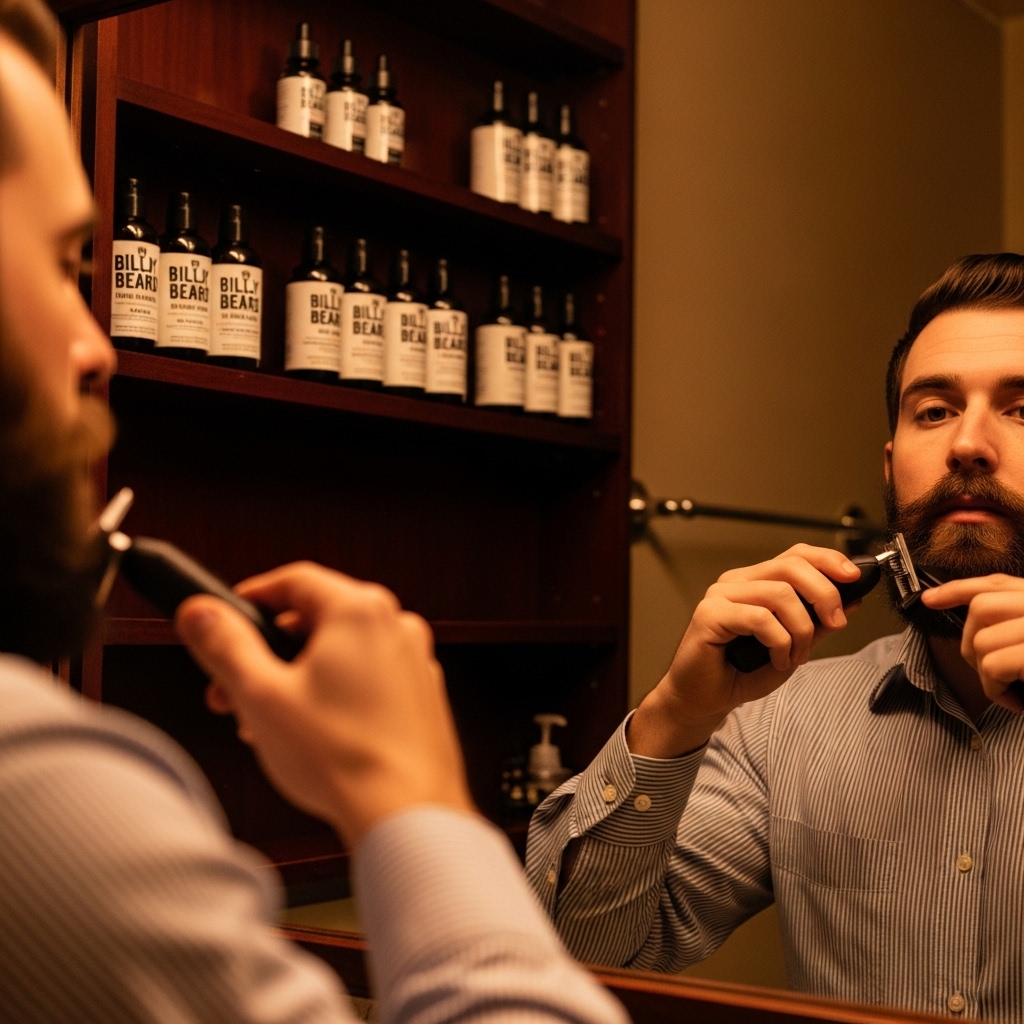
Most men who trim their own beards make the same two mistakes: they set the neckline too high, and they let the cheek line drift. The result is a beard that looks perpetually unfinished — not intentional, not styled, just managed.
A barber doesn’t have special tools you don’t. They have technique. And technique, unlike talent, can be learned.
What You’ll Actually Need
Before we talk method, let’s talk tools. You don’t need a cabinet full of equipment. You need three things:
A quality trimmer with length guards. A single trimmer with a range of guards handles 90% of beard maintenance. Variable length settings matter more than brand.
Barber scissors. For detail work — stray hairs, moustache shaping — scissors give you precision a trimmer blade can’t. A good pair runs $20–$40 and lasts years.
A fine-tooth comb. Lifts hair before cutting, so guards catch evenly. Doubles as your best tool for checking symmetry.
A hand mirror is optional but valuable for checking the neckline. Natural morning light beats bathroom overhead lighting for color accuracy.
The Neckline: Where Most Men Go Wrong
Here’s the rule most home trimmers miss: your neckline should sit two fingers above your Adam’s apple. Not at your jaw. Not at your chin. Two fingers above the Adam’s apple.
Why does this matter? A neckline set too high visually shortens your face and makes the beard look like it’s floating. Set it correctly — lower than instinct suggests — and the beard gains weight and intention.
To find the line:
- Place two fingers horizontally above your Adam’s apple
- The top of your index finger marks your neckline
- From that centre point, curve the line up toward each ear, following the natural angle of your jaw
When in doubt, trim less than you think. You can always take more off. You cannot put it back.
The Cheek Line: Intentional, Not Accidental
The cheek line defines the upper edge of your beard. Most men let it wander — catching stray hairs here, cleaning up there — until the line has no logic.
A gentleman’s cheek line should be either:
Natural — following the highest point where your beard grows in fully, with only strays removed above it. Best for full, dense beards.
Shaped — a deliberate line drawn from the corner of the mouth up toward the ear at a consistent angle. Best for patchy upper cheeks or men who want a cleaner, more defined look.
Pick one. Execute it consistently. The barber’s edge comes not from perfection on any single visit but from repeating the same precise lines every time.
The Trim Itself: Shortest to Longest
Work your beard from the shortest setting toward your target length — never the reverse.
Step 1: Comb out fully. Wet or dry, fully combed beard. Guards catch tangled hair poorly.
Step 2: Start with the bulk. Set your guard to your desired length — or one setting longer if you’re uncertain — and work in upward strokes against the grain across the widest parts of the beard.
Step 3: Fade the edges. Drop one guard size shorter on the sides and below the chin to create a subtle fade. This is what separates a shaped beard from a hacked one. The blend should be gradual, not obvious.
Step 4: Detail with scissors. Comb the moustache downward and trim any hairs that fall below the lip line. Check for strays near the cheek line. Scissors only — trimmers here are unforgiving.
Step 5: Define the neckline. No guard. Free-hand with the trimmer, bare blade, following the line you established. Clean strokes. Don’t second-guess mid-movement.
Step 6: Moisturise. A trimmed beard is a stressed beard — the ends are fresh cuts. A few drops of beard oil worked through the beard while it’s slightly damp seals the ends and keeps the skin beneath comfortable. This step is not optional if you want the beard to look its best by afternoon.
Symmetry: Check It Before You Finish
Step back. Look at your face full-on in the mirror, then in profile from both sides. Symmetry at the jaw. Consistent fade on both sides. Neckline level.
Most asymmetry isn’t from bad technique — it’s from trimming too close to the mirror and losing perspective. Distance is your quality check.
If something looks off: comb again. Check again. Only then correct.
Frequency and Maintenance
A well-maintained beard needs a full shape every two to three weeks. Between shapes, a quick neckline cleanup every week or so keeps the definition sharp without disrupting the length you’re building.
The mistake is waiting until the beard feels unruly before touching it. Regular, minor maintenance is far less forgiving of error than one major session every month.
A gentleman’s beard is never quite done. It’s tended. There’s a satisfaction in that — the ongoing craft of a thing worth keeping.
For the tools that belong in every gentleman’s grooming kit, explore the Billy Beard Grooming guides — or if you’re looking for gifts that hold up as well as a well-kept beard, Excalibur Brothers makes gear built to the same standard.