
Beard Balm vs. Beard Oil: A Gentleman's Guide to Choosing the Right Product
The debate is older than the man bun. Beard oil or beard balm — which one actually belongs in your grooming kit? The answer depends on your beard, your climate, and the occasion.
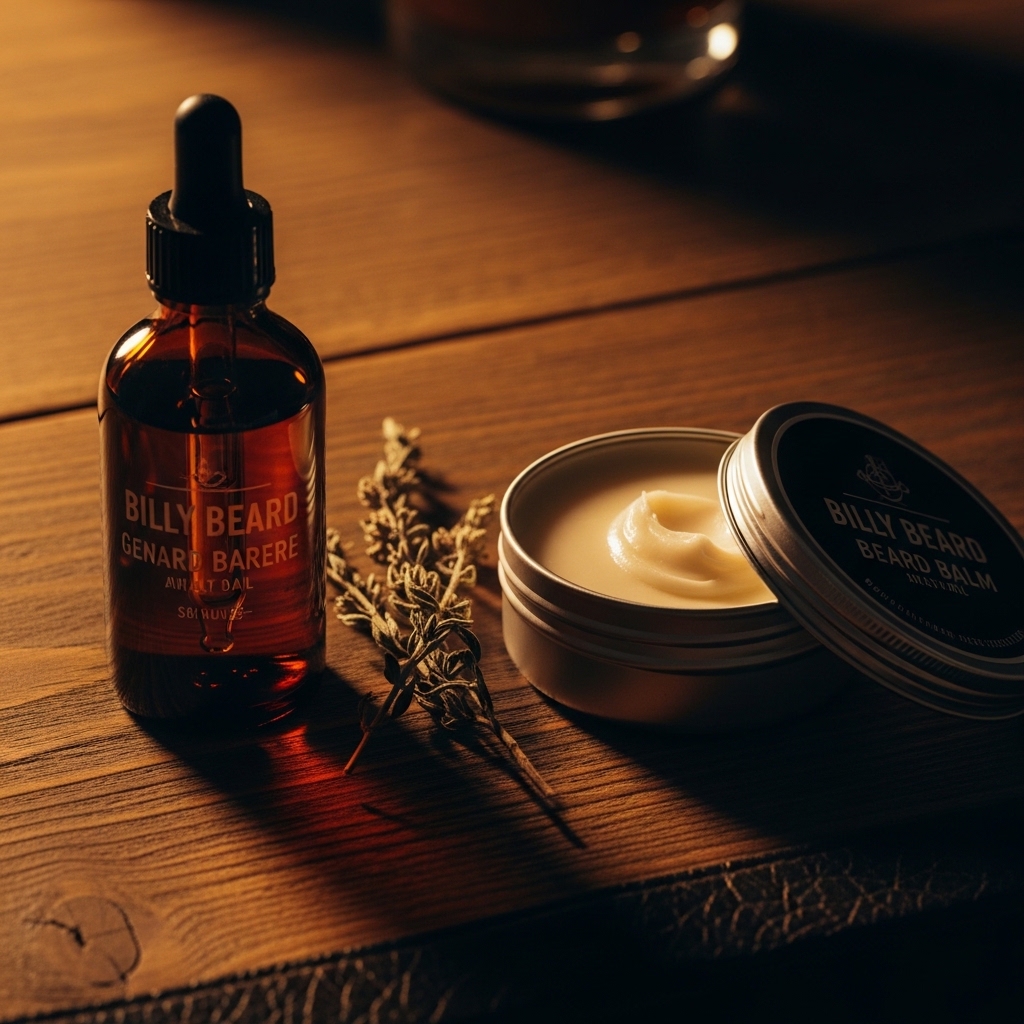
Every bearded man eventually faces the shelf — two products, similar promises, and zero instruction on which one to grab.
Beard oil. Beard balm. Both claim to soften, condition, and tame. Both have loyal advocates who swear the other is unnecessary. And both, when chosen correctly for the situation, are worth every penny.
A gentleman doesn’t pick at random. He understands his tools.
The Fundamental Difference
Think of it this way: beard oil is hydration, beard balm is structure.
Beard oil is a carrier oil blend — typically jojoba, argan, sweet almond, or a combination — infused with essential oils for scent and additional skin benefits. It absorbs quickly, nourishing both the beard hair and the skin beneath. There’s nothing to “hold” anything. It simply conditions.
Beard balm is a wax-and-butter emollient — usually shea butter, mango butter, or cocoa butter blended with beeswax and carrier oils. It conditions, yes. But it also provides light to medium hold, helping you shape and tame flyaways and unruly hairs.
Both serve the beard. But they serve it differently.
When Beard Oil Is the Right Call
Reach for the oil when:
Your beard is shorter. Under two inches, beard oil does everything you need. The skin beneath gets the moisture it craves, the hair stays soft, and you’re done in thirty seconds.
Your skin is the problem. Beardruff — that dry, flaky skin beneath the beard — is primarily a skin issue, not a hair issue. Beard oil addresses it directly. The carrier oils absorb into the skin and restore the natural moisture that washing strips away.
You want scent that breathes. A quality beard oil carries its fragrance lightly. Cedarwood, sandalwood, eucalyptus — the scent releases subtly as you move through your day, rather than announcing itself the moment you walk into a room.
The weather is warm. In heat and humidity, a heavier product like balm can feel suffocating. Oil keeps things comfortable without the weight.
A gentleman in the early stages of his beard — or one who simply wants effortless daily maintenance — builds his routine around oil.
When Beard Balm Earns Its Place
Reach for the balm when:
Your beard has length and opinion. Beyond two to three inches, beard hair develops what can generously be called “personality.” It goes where it wants. Balm gives you the means to politely disagree.
You need shape for a meeting, event, or occasion. Beard oil leaves no hold. If your beard needs to look intentional — a dinner out, a presentation, a photograph — balm is the tool that makes it happen. The beeswax creates a light structure that persists.
Cold and dry weather has moved in. Winter strips moisture from beard hair at a punishing rate. The butter base in a quality balm forms a barrier, locking in hydration far more effectively than oil alone in harsh conditions.
Your beard is coarse and wiry. Some beards — certain textures, particularly in dense, curly growth — respond better to the heavier conditioning of butters and wax than to lightweight oils. You’ll know yours within a week of honest experimentation.
The Case for Using Both
Here’s what most product guides won’t tell you: this isn’t a competition.
A well-considered grooming kit contains both. The sequence matters:
- Wash. A gentle beard wash, two or three times per week.
- Oil. Apply to a slightly damp beard. Work it into the skin first, then through the hair.
- Balm. Apply on top of the oil, once it has absorbed. Use your fingertips to warm the balm before working it through, shaping as you go.
The oil handles the skin and deep conditioning. The balm handles hold and surface appearance. Together, they cover every angle.
Think of the oil as the foundation. The balm as the finish.
Reading the Label
Not all beard oils and balms are equal. A few things worth knowing:
For beard oil: Jojoba oil is the gold standard carrier — its molecular structure mimics the skin’s natural sebum, meaning it absorbs without clogging pores. Argan oil adds shine. Sweet almond and grapeseed are lighter and suit fine or thin beards. Avoid mineral oil entirely — it sits on the surface, doesn’t absorb, and does nothing useful.
For beard balm: Beeswax level determines hold. A balm with beeswax listed third or fourth will be lighter; one with it listed first or second will have more hold and substance. Shea butter is the conditioning workhorse. Be wary of balms with long ingredient lists that read like a chemistry textbook — the best ones are simple.
A Final Word on Application
More is rarely better with either product. A few drops of oil and a small scrape of balm — roughly the size of a thumbnail — is enough for most beards. Overuse leads to greasiness, not greatness.
Work from the roots out. Distribute with fingers first, follow with a boar bristle brush to ensure even coverage and train the hair in your desired direction.
Consistency matters more than quantity. A modest amount applied daily outperforms a heavy application twice a week.
The man who understands his tools uses them with confidence. Whether you reach for the oil, the balm, or both depends on your beard — its length, its texture, its mood on a given morning.
What remains constant is the intention: a beard worth wearing, worn well.
Looking to deepen your understanding of the foundation? Our guide to choosing the right beard oil covers the carrier oils, ingredient lists, and what to look for when selecting your first — or best — bottle.