
The Gentleman's Guide to Camp Coffee: No Compromises in the Wild
Great coffee doesn't stop at the trailhead. A gentleman's breakdown of the best camp coffee methods — from cowboy coffee to AeroPress — ranked by the discerning outdoorsman.
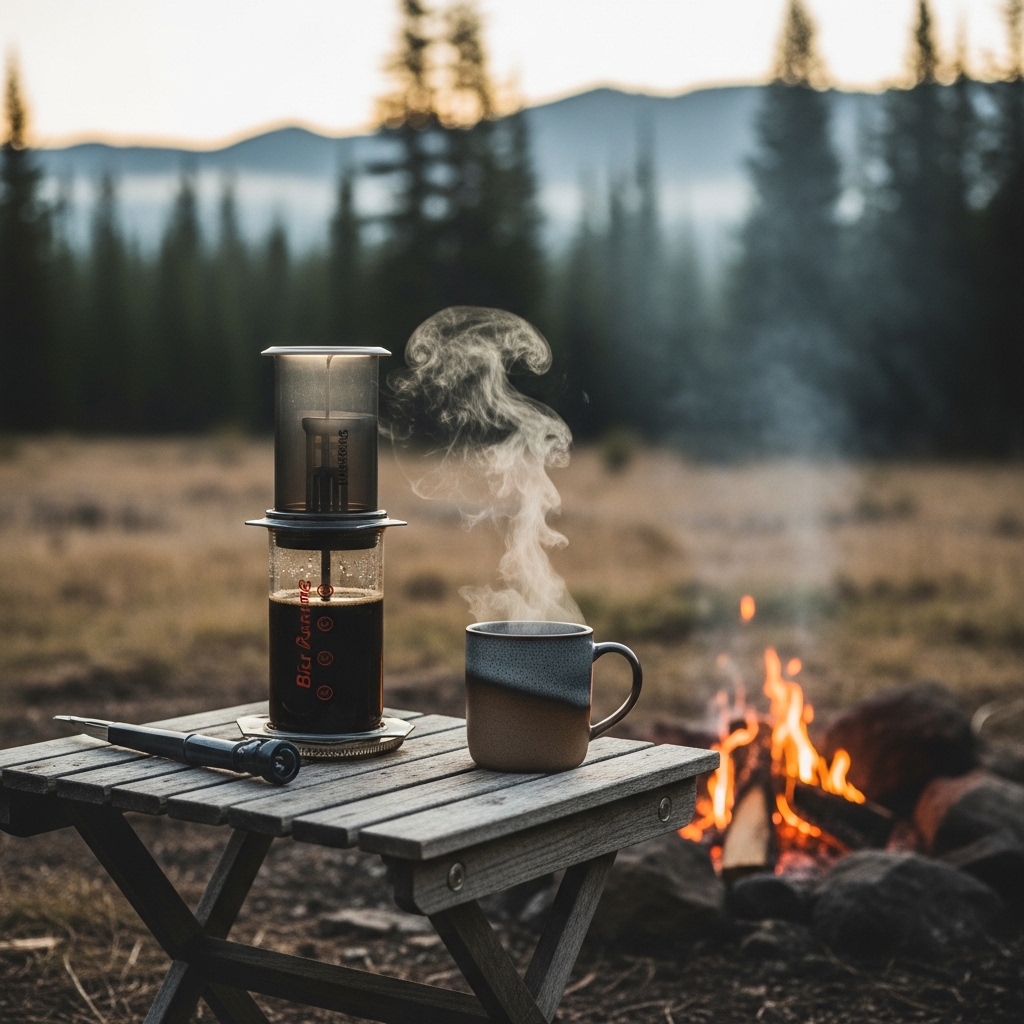
There is a particular cruelty in waking to cold mountain air, the smell of pine and woodsmoke drifting through the tent flap, only to discover that your morning coffee is brown dishwater in a tin cup. A gentleman need not accept this fate.
The wilderness offers no excuse for bad coffee. It requires only that you choose your method deliberately — and bring the right tools.
Here is your field guide to camp coffee, ranked from acceptable to transcendent.
Why Camp Coffee Gets a Bad Reputation
The problem is rarely the beans. It is the improvisation. A man who brews with precision at home suddenly resorts to boiling grounds in a pot “because it’s camping.” The Gentleman Explorer knows better. The wild is not a reason to lower standards. It is an invitation to bring them with you.
The Methods, Ranked
5. Instant Coffee — Emergency Use Only
A gentleman keeps a few packets of quality instant (Starbucks VIA, Mount Hagen) in his pack for true emergencies: the morning after a night hike, the dawn before a summit push when time is everything. It is not coffee. It is caffeine delivery, and there is a difference.
Keep it in the kit. Do not build your mornings around it.
4. Cowboy Coffee — Functional, Honest, Rustic
The old way: coarsely ground coffee, boiling water, patience. Add grounds directly to the pot, bring to a boil, pull from heat, wait two minutes for grounds to settle, pour carefully.
Done right, cowboy coffee is robust and satisfying — the coffee equivalent of a rare steak cooked over open flame. It lacks the clarity of filtered methods, but it carries character. The sediment at the bottom is not a flaw. It is evidence of a fire-built morning.
Best for: Minimalist trips, group camps, purists.
3. Percolator — Classic Camp Ritual
The percolator rewards patience. Water cycles upward through a tube, percolates over the grounds basket, repeats. Six minutes over a steady flame yields a full pot that keeps hot and improves with ceremony.
A good stainless percolator — the GSI Outdoors Glacier or a classic Stanley — is nearly indestructible and brews enough for the whole camp. There is something deeply satisfying about the rhythmic perking sound against morning birdsong.
Best for: Group camps, multi-day trips, those who value ritual over speed.
2. French Press — The Gentleman’s Basecamp Brew
A proper French press — the GSI Outdoors JavaPress or Snow Peak Titanium French Press — produces a rich, full-bodied cup that rivals your kitchen countertop. Add coarsely ground coffee, pour water just off the boil (about 93°C), steep four minutes, press slowly.
The result is complex, aromatic, and unmistakably civilised. The French press requires no filters, no special tools, just attention to temperature and time. Pack a small grinder (Hario Mini Mill or Porlex) and grind fresh at camp. The difference is remarkable.
Best for: Basecamp setups, car camping, those who will not compromise on flavour.
1. AeroPress — The Undefeated Camp Champion
A gentleman knows the right tool for the right situation. For backpacking and remote camps, nothing beats the AeroPress. Lightweight (220g), nearly indestructible, fast (under two minutes), and capable of producing espresso-strength concentrate or a clean, smooth cup — it is the most versatile piece of kit you can pack.
The technique:
- Place filter in cap, rinse with hot water
- Add 17–18g of medium-fine ground coffee
- Pour water at 85–90°C to the “2” line
- Stir, steep 90 seconds
- Press slowly and steadily — 30 seconds
The result is a cup that would not shame a specialty café. Dilute with hot water for an Americano. Press over a cup of snow-melted water heated at altitude. Brew before sunrise on a cliff edge.
Best for: Backpacking, solo trips, demanding palates at elevation.
What You Need in Your Kit
| Item | Recommendation |
|---|---|
| Grinder | Hario Mini Mill Slim or Porlex JP-30 |
| AeroPress kit | AeroPress Go (includes mug + lid) |
| French Press | GSI Outdoors JavaPress |
| Kettle | GSI Outdoors Halulite Boiler |
| Beans | Pre-grind at home or bring a hand grinder |
A note on water temperature: most camp stoves bring water to a rolling boil. For AeroPress and pour-over, let it sit off heat for 30–45 seconds before pouring. Boiling water (100°C) over quality grounds scorches the flavour compounds that make coffee interesting.
The Non-Negotiables
Bring quality beans. The wilderness does not improve bad coffee. A medium or medium-dark roast with low acidity holds up well to outdoor conditions — Ethiopian Yirgacheffe, Colombian Huila, or a quality house blend from a local roaster. Grind coarser for longer steep methods, finer for AeroPress.
Control your water. Filtered or snow-melt water makes a cleaner cup than heavily chlorinated campsite tap water. A small Sawyer filter does double duty.
Slow down the morning. The finest thing about camp coffee is not the coffee itself. It is the act of making it deliberately while the light shifts through trees and the fire settles to coals. The ritual is the point.
A gentleman who camps without considering his morning coffee has not truly planned his trip. These few extra grams in the pack — a hand grinder, a press, a good bag of beans — separate a fine morning from a merely adequate one.
Pack accordingly. The mountain will be there. So will the perfect cup.
Looking for more camp cooking guidance? Read The Cast Iron Chronicles: A Gentleman’s Guide to Campfire Cooking for everything you need to know about cooking with iron over open flame.